You probably won't meet Alice on your trip to Germany, but this is in many ways a wonderland. So don't read too many headlines and get ready for 10 experiences that don't waver, neither in terms of beauty nor finance.
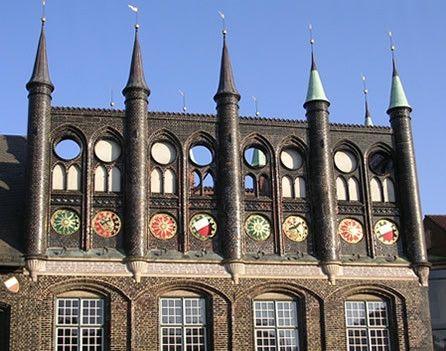
Lübeck, burgomaster's house © Photograph by Stefano Saporito
From the Baltic and Thomas Mann's Lübeck to Lake Constance, following the romantic routes of the Rhine or those that wind along roads deeply rooted in the spirit of Europe, Germany is truly a great classic, and like all classics it reserves endless discoveries. To travel it all, you need a guidebook. In this article, we followed our instincts and went on the hunt for some of its shiniest gems. The same thing you probably want to do.
1. Dresden, extraordinary skyline
Few cities can boast a more beautiful skyline than that of Dresden. The famous view from the northern bank of the River Elbe embraces a festive ensemble of exquisite spires, soaring towers and imposing domes of palaces, churches and majestic buildings. In the 18th century, the Saxon capital was called 'Florence of the North' and the allied bombs of World War II miraculously spared some of the most significant buildings. Our favourite is the Zwinger, a grandiose example of German Baroque that houses Raphael's Sistine Madonna in the Gemäldegalerie Alte Meister, one of Europe's most important museums.
2. Potsdam, the soul of Brandenburg
Brandenburg surrounds bustling Berlin, but its spirit is as far removed from the capital as Shangri-La can be. The jewel of the city is the Sanssouci Garden, which means 'without worries' in French. A vast expanse of ancient trees, rare plants and magnificent palaces. Its jewel is Schloss Sanssouci, where Frederick the Great liked to retire in summer. The park is open all year round from dawn to dusk. A nice brochure on such beauty can be found at this address.
3. Munich, the best brewery in the world
Of course, Germany is not all about beautiful sights and your admiration for the German people cannot help but feed on the sacred nectar of Munich. An evening with a mug in hand (one?) in the famous Hofbräuhaus is not to be missed. Even the strictest teetotaler will sooner or later let his curiosity get the better of him and want to check out the world's most famous brewery. Order a huge beer and watch the evening drift by as the regulars become more and more intimate and noisy. It may sound like a well-brewed tourist trap, but it is the essence of Munich.
4. Hamburg, harbour front
If you love big harbour cities, with their mix of hustle, decadence and sharp practicality, don't miss Hamburg. The definition 'gateway to the world' might seem pretentious, yet this is the largest port of a nation in many respects at the centre of Europe. Easy to imagine, therefore, that many things enter here. Hamburg is also the capital of German media and the richest city with its ever-growing container docks. The most pleasant way to explore this salt-covered behemoth? Rely on your own strength and push on the pedals. A useful reference is StadtRAD Hamburg, which operates at U-Bahn and S-Bahn stations and other points around the city.
5. Berlin, a holiday flat
For those who prefer to cook for themselves or like to be independent, those who watch their wallet, families or anyone who wants maximum privacy, renting a furnished flat for a short time could be the egg of Columbus. Lately, many options in this regard have been popping up like mushrooms, but here are a couple of pointers.
Brilliant Apartments: a name is a guarantee, in these eight stylish and modern flats, equipped with a full kitchen and able to accommodate up to six people. What's more, they are located on Oderberger Strasse and Rykestrasse, both among the trendiest streets in Prenzlauer Berg, allowing you to be close to everything.
T&CApartments: a wide choice of stylish one- to four-bedroom flats, carefully selected in the Mitte, Prenzlauer Berg, Tiergarten and Schöneberg districts; the headquarters are in Prenzlauer Berg.
Sign up for our newsletter! For you weekly travel tips, special offers, stories from the world and 30% discount on your first order.
6. A sausage like you've never had before
Again, speaking of German flavours. Forget the anaemic, impractical and personality-less sausages you may have encountered while shopping. At issue here is the real frankfurter, the kind you can only eat at its best and in a thousand variations at a German street stall. One of our favourites is the currywurst, thinly sliced, drizzled with ketchup and sprinkled with curry. It goes perfectly with Pommes rot-weiss, chips with mayonnaise and ketchup. Bavaria, then, is renowned for Weisswurst, an unpreserved and therefore white and chewy-looking veal sausage that is eaten fresh from the butcher's hands. A real treat.
7. Aachen, in the footsteps of Charlemagne
The Romans healed their war wounds and aching joints amidst the vapours of the hot mineral waters of Aachen's springs, but it was Charlemagne who made the city famous: the emperor, in fact, also liked to bathe in the thermal waters, but it was for more strategic reasons that, in 794, he made Aachen the geographical and political capital of his vast Frankish empire. Today, Aachen is still a very international city, and owes its status also to its geographical location, close to the borders with Belgium and the Netherlands. Charlemagne's legacy also lives on in the amazing Dom, which was the first UNESCO World Heritage site in 1978. Aachen is also the city of origin of the famous Printen, crunchy biscuits made of gingerbread and hazelnuts, covered with chocolate or icing.
8. Heidelberg, walking with Mark Twain
There are many good reasons to come to Heidelberg in northern Baden-Wurttemberg. One can come to recognise in the Altstadt and the Neckar river the light that the painter William Turner was able to capture; or to take a tour of the locals as Goethe used to do in search of inspiration; or to walk in romantic solitude along the Philosophenweg, whose name already evokes the philosophers who taught at its glorious university, such as Karl Jaspers, one of the fathers of existentialism. The most peculiar thing, however, is to retrace the footsteps of Mark Twain, who in his 1880 novel A Tramp Abroad made some amusing observations about the town's goliardic associations and praised the castle ruins. The castle, of course, together with the famous University, is the city's great attraction.
9. A plunge into the Black Forest
Dense and dark, with velvety green landscapes dotted with almost gloomy patches of trees, the Black Forest is a paradise for cyclists and hikers. The thermal baths for which it is known are perfect for sore muscles. The great sight of the area is Baden-Baden. Bill Clinton was so impressed by it that, in pure Yankee spirit, he said: 'It is so beautiful that you feel the need to say its name twice'. The town is famous for its spas, to which it owes its name ('Baden' means 'bath'). Above all, the sumptuous Friedrichsbad where, as Twain said, 'after 10 minutes you lose track of time, after 20 you lose track of the world'.
10. The consequences of the Bauhaus
Take a good look: chances are that in your home or workplace, perhaps in the chair you use to comfortably read these lines, there is some consequence of the Bauhaus. We are of course talking about the principle known as "Form follows function", the guiding idea of the school and the architecture and design movement that mattered most in the 20th century. To see where geniuses like Gropius, Klee and Kandinsky taught and created, pop into Dessau. And don't miss a visit to the Bauhausgebaude, the building restored in 2006 after years of neglect. Keep in mind that the town merged in 2007 with the smaller Rosslau, changing its name to Dessen-Rosslau. We are in eastern Saxony-Anhalt, former GDR.
Related articles
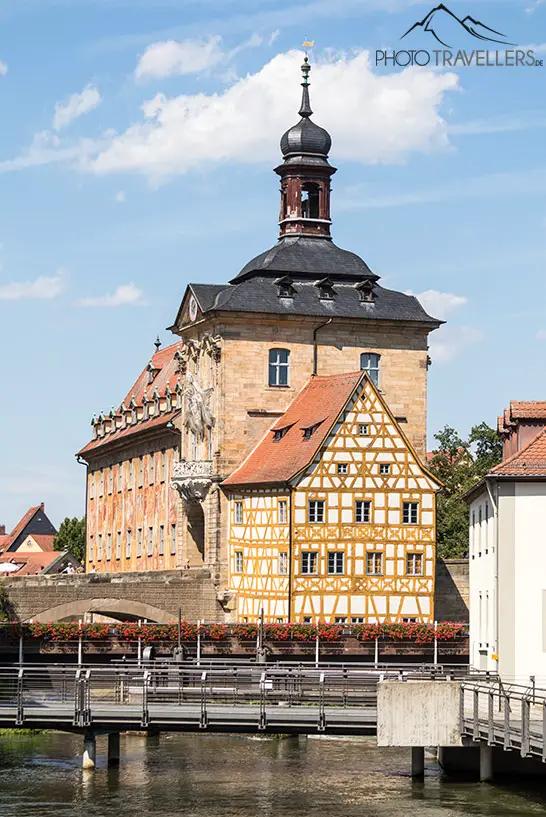
Beautiful cities in Germany: These 15 places you must see
Autumn holidays in Germany: 15 October destinations

Kinderhotels in Germany - you need to know these 15 family resorts
10 Things to eat in Dusseldorf and where
10 Things to eat in Stuttgart and where
Germany: The 20 most beautiful lakes near you + tips for excursions [with map].
Romantische Strasse: Itinerary and stages of the Romantic Road in Germany